Corner Plot vs Regular Plot: What Should Buyers Actually Consider?
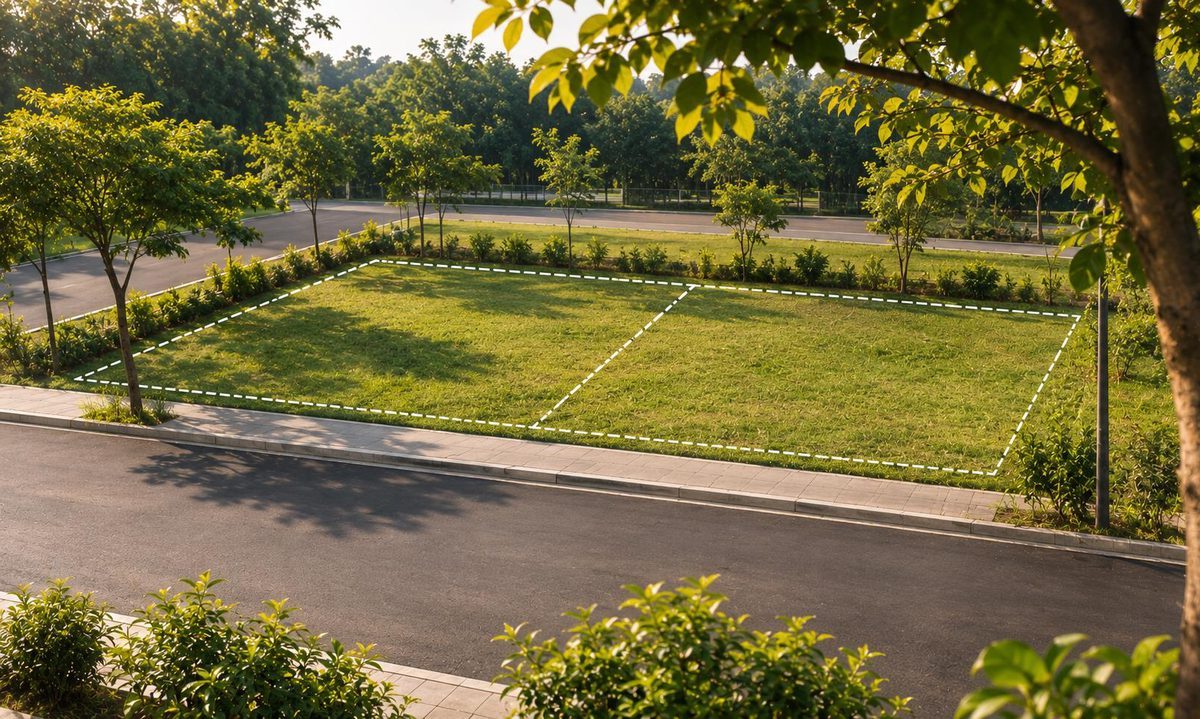
When choosing a residential plot, one question comes up frequently: Should you buy a corner plot or a regular plot?
Corner plots are often perceived as more desirable. They may offer additional frontage, greater openness and more flexibility in how a future home is planned. In some developments, that can also mean a higher price.
But a corner plot is not automatically the better plot.
The right choice depends on the plot itself, the applicable building regulations, the layout of the development and, most importantly, what you eventually intend to do with the land.
Here are the factors worth evaluating before making the decision.
1. Start With the Basic Difference
A regular internal plot generally has road access along one side, with neighbouring plots on the remaining sides.
A corner plot sits at the intersection of two roads and therefore typically has road frontage on two sides.
That simple difference can influence several aspects of the property—from access and openness to setbacks and the way a future home can be designed.
Rather than choosing based on the “corner plot” label alone, buyers should understand what those differences mean for the specific plot they are considering.
2. Compare Usable Dimensions, Not Just Square Footage
Two plots may both measure 1,500 sq.ft. and still offer very different building possibilities.
Look at the actual:
- Frontage
- Depth
- Shape
- Orientation
- Road-facing sides
- Applicable setbacks
A well-proportioned regular plot may sometimes be more useful for your intended home than a corner plot of the same area.
Square footage tells you the size of the land. Dimensions tell you how that land can potentially be used.
3. Understand the Setback Requirements
This is one of the most important factors to check before paying a premium for a corner plot.
Because a corner plot faces two roads, the applicable setback requirements may differ from those of an internal plot, depending on local regulations and the approved layout.
That can affect the portion of the plot available for construction.
Before purchasing, buyers planning to build should have a qualified architect or consultant assess the plot against the applicable building regulations.
Don't assume that more road frontage automatically means more buildable space.
4. Consider Access
Corner plots can provide interesting possibilities for planning vehicular and pedestrian access because of their relationship with two roads.
For example, depending on the layout and applicable regulations, the positioning of a driveway or entrance may have greater flexibility.
A regular plot may offer a more straightforward access arrangement from a single road.
Neither is inherently better.
The question is how the access works with the home you intend to build.
5. Think About Openness and Privacy Together
One reason buyers are often attracted to corner plots is the sense of openness.
With roads along two sides, there may be fewer immediately adjoining plots and greater exposure to the surrounding streetscape.
But openness and privacy need to be considered together.
More road-facing edges can also mean greater visibility from outside the property and potentially more movement along the boundary.
For someone designing a home, this affects decisions around windows, balconies, gardens, compound walls and the placement of private spaces.
6. Look at the Roads Themselves
Not all corners are equal.
A corner where two quiet internal roads meet can feel very different from a plot located where a busier approach road intersects another road.
When visiting the site, look at:
- Width of both roads
- Expected traffic movement
- Position within the overall layout
- Nearby intersections
- Access to amenities and open spaces
- Likely movement once the community is occupied
The word “corner” tells you very little about these factors.
The actual location of the corner within the masterplan tells you much more.
7. Consider Orientation
Orientation matters for both corner and regular plots.
It can influence how an architect approaches daylight, ventilation, entrances, outdoor spaces and the overall layout of a future home.
Rather than assuming that one orientation or plot type is universally superior, consider how the specific combination of orientation + dimensions + road position works for your requirements.
If you intend to build, this is another area where getting an architect's opinion before purchasing can be valuable.
8. Don't Assume a Corner Plot Will Automatically Appreciate More
Corner plots may command a premium in some developments because of factors such as additional frontage, openness or buyer preference.
But buyers should be careful about assuming that the word “corner” itself guarantees better appreciation.
Long-term value is influenced by several factors, including the location, development quality, plot usability, surrounding infrastructure, demand and the specific position of the plot within the community.
If you are buying primarily as an investment, compare the additional amount being paid for the corner plot with the actual advantages that particular plot offers.
9. If You Plan to Build, Think About the House Before Choosing the Plot
This is where the decision becomes much clearer.
Imagine the home you may eventually want to build.
Where would you like the entrance?
How much parking do you need?
Would you like a garden?
Where should the private areas of the home sit?
How important are openness and natural light?
Once you begin asking these questions, the decision stops being simply:
Corner plot or regular plot?
It becomes:
Which particular plot gives me the best foundation for the home I want to create?
10. Evaluate the Individual Plot, Not the Category
There are excellent corner plots and excellent regular plots.
There are also plots in both categories that may not suit a particular buyer.
A well-positioned regular plot with useful dimensions, suitable orientation and a good relationship with the rest of the development may be a better choice than a corner plot selected purely because it is on a corner.
Similarly, the right corner plot can offer characteristics that a particular buyer genuinely values.
The important thing is to evaluate the plot on ground and within the context of the complete masterplan .
So, Which One Should You Choose?
There is no universal winner.
Choose a corner plot if the additional frontage, openness, access possibilities and position within the development genuinely benefit the way you intend to use the land.
Choose a regular plot if its dimensions, orientation, position and price make more sense for your requirements.
Most importantly, don't pay a premium for a category without understanding what you are receiving in return.
The best plot isn't necessarily the corner plot or the regular plot. It is the plot that works best for what you intend to do with it.
About Bulwark Group
At Bulwark Group, we’re redefining real estate through transparency, planning, and infrastructure-aligned developments.
Bulwark Group is a premier luxury villa plots developer in Devanahalli, North Bangalore, specializing in eco-luxury and strategically located plotted developments. Committed to excellence and sustainable living, Bulwark offers visionary investors and homebuyers a unique opportunity to own high-value real estate with long-term growth potential near Bangalore’s airport.
Contact Bulwark Group
Location: First Floor, Door No. 3, Reshma Apartments, 196, near Airtel Office, opposite Kotak Bank, Jayamahal Extension, Bengaluru, Karnataka 560046
Email: enquiry@bulwarkgroup.in
Call: +91 963 282 6555
Interested in investing in North Bangalore?
Speak to one of our advisors and explore current plot availability in our premium communities.
Talk to an Advisor